
The Old Money Aesthetic: Quiet Luxury Style Guide
Master the old money aesthetic of quiet luxury: timeless classic style, a neutral palette, quality over logos and outfit styling that works on any budget.
 Yasmin Ferran9 min read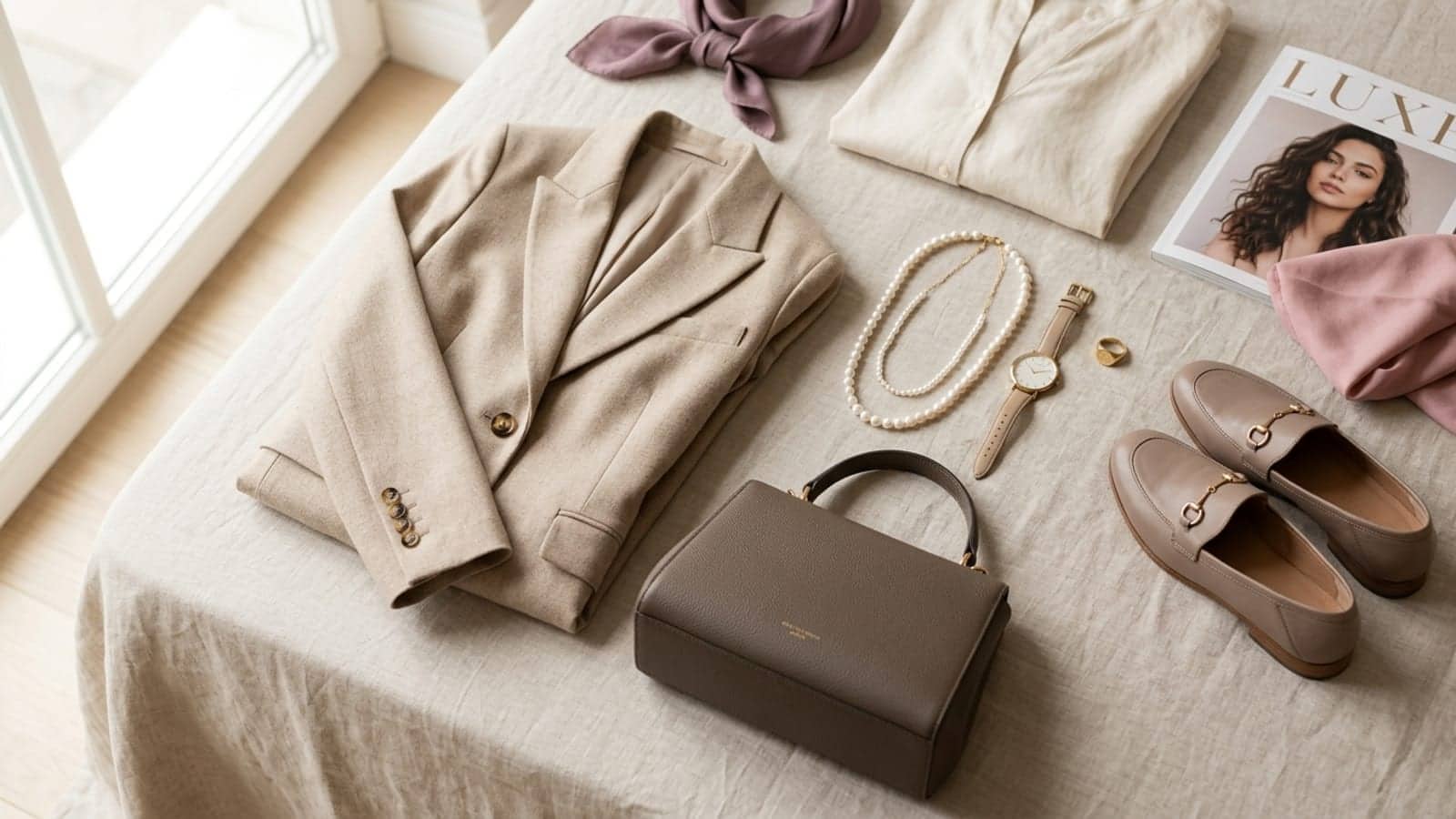
Table of contents
- What the Old Money Aesthetic Really Is
- The Building Blocks of Classic Style
- Why Quality Beats Logos Every Time
- The Power of Tailoring
- Fabrics That Read as Quiet Luxury
- The Neutral Palette That Signals Quiet Luxury
- Outfit Styling for an Effortless Look
- Grooming and the Finishing Details
- How to Get the Look on Any Budget
- Conclusion
You have seen her, even if you never learned her name: the woman in the camel coat and simple gold watch who somehow looks more expensive than anyone covered in logos. She is not trying to be noticed, and that is exactly why you notice her. This is the old money aesthetic, and it has quietly become one of the most searched-for looks in fashion.
The old money aesthetic, often called quiet luxury, is a style built on restraint. It whispers instead of shouts. There are no giant logos, no loud prints, no chasing of every trend. Instead there is beautiful tailoring, a calm neutral palette, and pieces chosen to last for years rather than a single season. It is the wardrobe of someone who has nothing to prove.
The most liberating part? You do not need to be born into wealth or spend a fortune to capture it. Quiet luxury is a set of principles anyone can learn: buy well, fit well, tone it down. In this guide we will walk through the key pieces, the palette, the grooming and the outfit styling that create this timeless look on any budget. If you are still discovering what suits you, start with our guide to finding your personal style, then refine it here.
What the Old Money Aesthetic Really Is
At its core, the old money aesthetic is about looking effortlessly refined without ever appearing to try. It draws on the wardrobes of country estates, sailing clubs and quiet wealth, where clothes were expected to last and taste was measured by discretion, not display. The message is understated confidence.
This is why quiet luxury feels so different from fast fashion. Fast fashion chases novelty and shouts for attention; quiet luxury values permanence and speaks softly. A perfectly cut blazer worn for a decade says more than a closet full of disposable trends. The look rewards patience and intention.
It also flatters real life. Because the pieces are classic and versatile, they work at the office, at brunch and at a family dinner without a second thought. You stop performing fashion and start simply looking pulled together, which is the whole point.
The Building Blocks of Classic Style
Classic style is the backbone of the old money wardrobe, so it helps to know the pieces that appear again and again. These are investment items in spirit even when they are budget buys, because they never date and they work with everything.
- A tailored blazer in navy, camel or grey.
- A crisp white button-down shirt in cotton or poplin.
- Well-cut trousers with a clean, straight or wide leg.
- A knife-pleated or A-line midi skirt.
- Fine-gauge knitwear in cashmere or merino, or a good wool blend.
- A timeless trench coat and a camel wool coat.
- Leather loafers, ballet flats and simple white sneakers.
- A structured leather bag in a neutral tone.
Classic style is less about owning all of these at once and more about choosing quality over quantity. A capsule of pieces that mix and match will always beat a crowded closet, which is why this look pairs so naturally with a considered wardrobe. Our guide to building a capsule wardrobe of essentials is the perfect companion here.
Why Quality Beats Logos Every Time
Nothing undermines quiet luxury faster than a loud logo. The whole philosophy is that true quality does not need a label to announce itself. So instead of paying for someone else's branding, you invest in the things that actually make clothes look expensive: fabric, construction and fit.
Reach for natural fibers whenever you can: cotton, linen, wool, cashmere and silk drape beautifully and age gracefully. Check the seams, the buttons and the lining. Well-made pieces have even stitching, buttons that feel solid, and hems that hang straight. These details read as expensive from across a room, even when the price was modest.
Fit is the great equalizer. A ten-dollar shirt that fits your shoulders perfectly looks better than a designer one that gapes and pulls. Which brings us to the single most powerful budget trick in fashion.
The Power of Tailoring
A good tailor is the secret weapon of quiet luxury. Taking in a waist, shortening a hem or narrowing a sleeve transforms an ordinary garment into something that looks made for you. It is inexpensive compared with buying new, and it is exactly how a modest wardrobe starts to look quietly luxurious.
Fabrics That Read as Quiet Luxury
The fabric of a garment often matters more than its cut when it comes to looking expensive. Natural fibers move, drape and age in a way synthetics rarely match, and learning to feel the difference is a quiet luxury skill worth developing. Reach for wool, cotton, linen, silk and cashmere, and be wary of anything shiny, stiff or clingy that gives away a low price.
- Wool and cashmere for coats and knitwear that hold their shape season after season.
- Cotton and linen for shirts and warm-weather pieces that breathe and soften with wear.
- Silk and fine viscose for blouses and slip skirts with a soft, expensive-looking drape.
Run your hand over a piece before you buy it. A fabric that feels substantial and smooth will always photograph and wear better than a flimsy one, no matter the label sewn inside. This tactile quality is where the whole aesthetic quietly lives.
The Neutral Palette That Signals Quiet Luxury
Color, or rather the calm absence of loud color, is central to quiet luxury. A tight neutral palette makes everything in your closet coordinate, which instantly looks more considered and expensive. It also makes outfit styling effortless, because almost every piece works with every other.
Build your palette around cream, camel, beige, chocolate brown, navy, grey, crisp white and black. Add depth with soft, muted tones like sage, olive or burgundy if you want a touch of color, but keep them low in saturation. The goal is harmony, not contrast.
When everything lives in the same quiet family, you can get dressed in the dark and still look coordinated. That is the quiet magic of this palette: it does the styling work for you while looking intentional and grown-up.
Outfit Styling for an Effortless Look
Outfit styling in the old money world is all about proportion, tucking and finishing touches rather than statement pieces. The clothes are simple, so the way you put them together is what creates polish. A few reliable formulas will carry you far.
- Tailored trousers, a tucked white shirt and a fine knit over the shoulders.
- A midi skirt with a tucked shirt and loafers for daytime ease.
- A camel coat over an all-neutral outfit for instant refinement.
- Straight jeans, a crisp shirt and ballet flats for elevated casual days.
- A blazer thrown over a simple tee and trousers to dress up the ordinary.
The finishing details matter most. Tuck your shirt or do a loose front tuck, cuff a sleeve, and keep accessories minimal. This kind of intentional outfit styling is what separates looking thrown together from looking quietly expensive, and it costs nothing to practice.
Grooming and the Finishing Details
Quiet luxury does not stop at clothes; it extends to how put together you look overall. Grooming is the invisible thread that ties the whole aesthetic together, and neglecting it undoes even the best outfit.
Keep your hair clean, healthy and simply styled: a low bun, a sleek ponytail or soft, brushed-out waves all suit the look. Makeup stays polished but natural, think groomed brows, a little concealer, a wash of blush and a neutral lip. Nails are neat in a nude or soft tone rather than a bright statement shade.
The same restraint applies to accessories. A slim watch, small gold hoops, a single delicate necklace and a quality leather bag say far more than a pile of trend pieces. Everything should look cared for, because in the old money world, maintenance is the ultimate luxury.
How to Get the Look on Any Budget
Here is the part that makes this style so democratic: you can build it slowly and affordably. Quiet luxury rewards patience, and a considered secondhand find beats a rushed full-price mistake every time.
- Shop secondhand and vintage for cashmere, wool coats and leather bags at a fraction of retail.
- Buy fewer, better pieces and skip the trend impulse buys.
- Prioritize fit, then use a tailor to perfect it.
- Learn to care for clothes: steam, brush and store them properly.
- Choose classic silhouettes over anything trend-driven.
- Remove cheap hardware and swap flimsy buttons for better ones.
Approached this way, the old money aesthetic becomes a smarter way to shop, not an expensive one. You spend less over time because your pieces last and never go out of style, and you dress with a calm confidence that no logo can buy.
Conclusion
The old money aesthetic proves that true elegance is quiet. It is not about wealth or labels but about restraint, quality and care: a neutral palette, classic style, thoughtful outfit styling and impeccable grooming. Build it slowly, buy well, fit everything to your body, and tend to what you own. Do that, and quiet luxury stops being a trend you are chasing and becomes simply the way you dress, timeless, refined and unmistakably yours, whatever your budget happens to be.
Frequently asked questions
Do I need expensive designer clothes for the old money look?
No. The old money aesthetic is about quality, fit and restraint, not price tags. Well-tailored basics in good fabrics from mid-range or secondhand shops can look far more refined than flashy logo-covered pieces.
What colors define quiet luxury style?
A neutral palette rules: cream, camel, navy, grey, chocolate brown, crisp white and black. These tones mix effortlessly, look expensive together and let the quality of the fabric and the fit take center stage.
Is the old money aesthetic the same as minimalism?
They overlap but are not identical. Minimalism strips things back to the essentials, while quiet luxury adds a layer of polish, heritage fabrics and classic tailoring. You can be quietly luxurious without being strictly minimalist.
How do I make cheap clothes look expensive?
Focus on fit, fabric and grooming. Tailor pieces so they hang well, choose natural fibers over shiny synthetics, keep everything clean and pressed, stick to a neutral palette, and remove loud logos and cheap hardware.
Tools and guides you might find useful
Related articles
Hijab & Modest Fashion 2026: Elegant Style Guide
Discover modest fashion and hijab styling trends for 2026, from chiffon and jersey wraps to abayas, midi skirts and elegant outfit ideas for work and beyond.
9 min read
Girls Fashion Trends 2026: The Ultimate Style Guide
Explore the biggest girls fashion trends for 2026: key colors, silhouettes and must-have pieces, plus how to wear each trend and make it your own on a budget.
8 min read
How to Find Your Personal Style: A Confidence Guide
Discover how to find your personal style with mood boards, style archetypes and a signature look, plus outfit styling tips that build real self-confidence.
8 min read