
Gut Health Foods: Beat Bloating and Feel Lighter
Understand your gut microbiome the simple way: the best foods for gut health, fermented foods and fiber, how to reduce bloating, and the gut-skin link.
 Rania Idrissi10 min read
Table of contents
- Your Gut Microbiome, Simply Explained
- What Gut Health Really Means for Your Body
- The Best Foods for Gut Health
- Fermented Foods: Tiny Helpers for a Happy Gut
- Easy Ways to Add Fermented Foods
- Fiber: The Fuel Your Gut Bacteria Love
- Foods That Trigger Bloating and What to Eat Instead
- Simple Habits to Reduce Bloating Fast
- The Gut-Skin Connection and Everyday Wellness
- A Gentle Day of Gut-Friendly Healthy Nutrition
- Conclusion
You know that heavy, tight feeling after a meal, the one where your favorite jeans suddenly feel a size too small by evening? Or the strange way your mood, your skin, and your energy all seem to dip on the days your stomach feels off? None of that is in your head. It lives in your gut, and it holds far more power over how you feel than most of us were ever taught.
Your gut does much more than digest food. It houses trillions of tiny microbes that shape your immunity, your hormones, your mood, and even the glow of your skin. When that inner world is balanced, you feel light, clear, and energized. When it falls out of sync, you feel puffy, sluggish, and inflamed. The reassuring part is that you have real influence over it, and your most powerful tool is sitting on your plate three times a day.
In this guide we will unpack the gut microbiome in plain language, the foods that help and the ones that hurt, the truth about fermented foods and fiber, gentle ways to calm bloating, and the surprising link between your gut and your skin. Think of it as a warm, no-nonsense conversation about feeling good from the inside out. For the wider picture, our guide to everyday balanced nutrition for women pairs beautifully with everything here.
Your Gut Microbiome, Simply Explained
Deep inside your digestive system lives a bustling community of bacteria, yeasts, and other microbes known as the gut microbiome. Picture a garden: when it is full of diverse, friendly plants, weeds struggle to take over. Your gut works the same way. A rich variety of good bacteria crowds out the troublemakers, breaks down your food, and produces vitamins and calming compounds your body cannot make on its own.
Every one of us carries a unique microbiome, shaped by how we were born, what we ate as children, the medicines we have taken, and our daily stress levels. It is not fixed for life, though. Within days of changing what you eat, the balance of these microbes begins to shift, which is exactly why food is such a direct route to better gut health.
When people talk about gut health, they simply mean how balanced and diverse this inner garden is. A thriving gut digests smoothly, keeps inflammation low, and quietly supports the rest of your body, from your immune defenses to your everyday mood.
What Gut Health Really Means for Your Body
Good gut health reaches far beyond digestion. A large share of your immune cells live in and around your gut, so a balanced microbiome helps you fend off colds and recover faster. Your gut also produces much of your serotonin, the feel-good chemical, which is why an unhappy gut so often walks hand in hand with low mood, brain fog, and anxiety.
A healthy gut lining acts like a careful gatekeeper, letting nutrients through while keeping irritants out. When that lining is inflamed or the bacteria are out of balance, the whole system struggles, and you feel it as fatigue, cravings, irregular digestion, and that all-too-familiar puffiness.
This is why caring for your gut is one of the smartest investments you can make in your overall wellness. It is not a trendy fix but a foundation, one that touches your energy, your immunity, your skin, and your sense of calm all at once.
The Best Foods for Gut Health
The single most helpful thing you can do for your gut is eat a wide variety of plants across the week. Researchers often suggest aiming for thirty different plant foods every week, counting vegetables, fruits, whole grains, nuts, seeds, herbs, and spices. Variety feeds variety: more types of plants mean more types of good bacteria.
Fill your basket with colorful vegetables, berries, oats, lentils, beans, extra virgin olive oil, garlic, ginger, and a rainbow of leafy greens. These whole foods deliver the fibers, antioxidants, and polyphenols your microbes feast on. Polyphenol-rich foods like dark berries, green tea, and dark chocolate deserve a special mention, because your gut bacteria transform them into compounds that lower inflammation.
None of this requires perfection or expensive superfoods. Solid, affordable healthy nutrition built around plants, whole grains, and good fats does more for your gut than any single miracle ingredient ever could. Consistency and variety are the real secret.
Fermented Foods: Tiny Helpers for a Happy Gut
Fermented foods are living foods, packed with beneficial bacteria that top up your microbiome directly. Generations of women around the world have eaten them for centuries, long before science explained why they work so well.
Reach for plain yogurt with live cultures, kefir, sauerkraut, kimchi, miso, and traditional pickles fermented in salt rather than vinegar. A few spoonfuls a day is plenty. If you are new to them, start small, because introducing lots of fermented foods too quickly can cause temporary bloating while your gut adjusts.
Easy Ways to Add Fermented Foods
- Stir a spoonful of yogurt or kefir into your breakfast bowl or smoothie.
- Add a small forkful of sauerkraut or kimchi beside your lunch.
- Whisk a little miso into warm soup once it is off the heat, so the good bacteria survive.
- Choose fermented over vinegar-based pickles when you can.
These tiny additions cost almost nothing and quietly strengthen your gut health day after day.
Fiber: The Fuel Your Gut Bacteria Love
If good bacteria are the garden, fiber is the water and sunshine that keeps them flourishing. Your body cannot digest fiber on its own, so it travels down to your gut, where your microbes ferment it and produce short-chain fatty acids that soothe inflammation and nourish your gut lining.
There are two kinds worth knowing. Soluble fiber, found in oats, apples, beans, and flaxseed, turns gel-like and feeds your bacteria. Insoluble fiber, found in whole grains, vegetables, and skins, adds bulk and keeps everything moving. You want both, and the simplest way to get them is to eat whole, minimally processed plants.
One gentle rule matters here: increase fiber slowly and drink plenty of water alongside it. Doubling your fiber overnight is a fast track to bloating and discomfort. Add one extra fiber-rich food every few days, let your gut catch up, and this pillar of healthy nutrition becomes a comfortable, lifelong habit.
Foods That Trigger Bloating and What to Eat Instead
Some foods reliably leave many women feeling bloated, and it helps to know the usual suspects. Ultra-processed snacks, sugary drinks, fried foods, and excess alcohol feed the less friendly bacteria and irritate your gut. Artificial sweeteners in diet drinks and sugar-free gum can also cause gas and bloating in sensitive people.
That does not mean these foods are forbidden forever. It means noticing how your own body responds and choosing gentler swaps most of the time. Trade fizzy drinks for still water with lemon, swap heavy fried meals for grilled or roasted versions, and reach for fruit and nuts instead of sugary packaged snacks.
Everyone is different, so a little detective work pays off. Keeping a simple note of what you ate and how your stomach felt for a couple of weeks can reveal your personal bloating triggers far better than any generic list. Awareness, not restriction, is the goal.
Simple Habits to Reduce Bloating Fast
Beyond what you eat, how you eat has a huge effect on bloating. Rushing meals, talking while chewing, and gulping food all make you swallow air, which then sits trapped in your belly. Slowing down is one of the fastest, cheapest ways to feel lighter.
Try these calming habits when bloating strikes:
- Eat slowly and chew each bite thoroughly, putting your fork down between mouthfuls.
- Sip water through the day rather than drinking large amounts during meals.
- Take a gentle ten-minute walk after eating to help digestion move along.
- Manage stress, since a tense mind sends tension straight to your gut.
- Give your body a rest from constant snacking, letting your digestion complete its cycle.
Stress deserves special attention, because your gut and brain are in constant conversation. Calming practices like slow breathing, journaling, and enough sleep ease bloating just as reliably as any food swap.
The Gut-Skin Connection and Everyday Wellness
Here is where it gets beautiful. Your gut and your skin are deeply linked through what scientists call the gut-skin axis. When your gut is inflamed or unbalanced, that inflammation can surface as dullness, breakouts, redness, or sensitivity. Calm the gut, and the skin very often follows.
This is why so many women who improve their gut health notice a clearer, brighter complexion within weeks, without changing a single product in their skincare routine. Fiber, fermented foods, hydration, and less sugar work from the inside to do what serums cannot reach. Our guide to glowing skin from the foods you eat explores this connection in delicious detail.
Seen this way, gut care is a cornerstone of holistic wellness. A nourished gut supports your energy, your mood, your immunity, and your skin all together, which is a far kinder and more lasting path to feeling good than chasing quick fixes one symptom at a time.
A Gentle Day of Gut-Friendly Healthy Nutrition
Let us make this practical with a simple, unfussy day of eating. Breakfast might be oats topped with berries, a spoonful of yogurt, and a sprinkle of flaxseed, a lovely mix of fiber, fermented food, and polyphenols. Mid-morning, reach for an apple and a handful of walnuts.
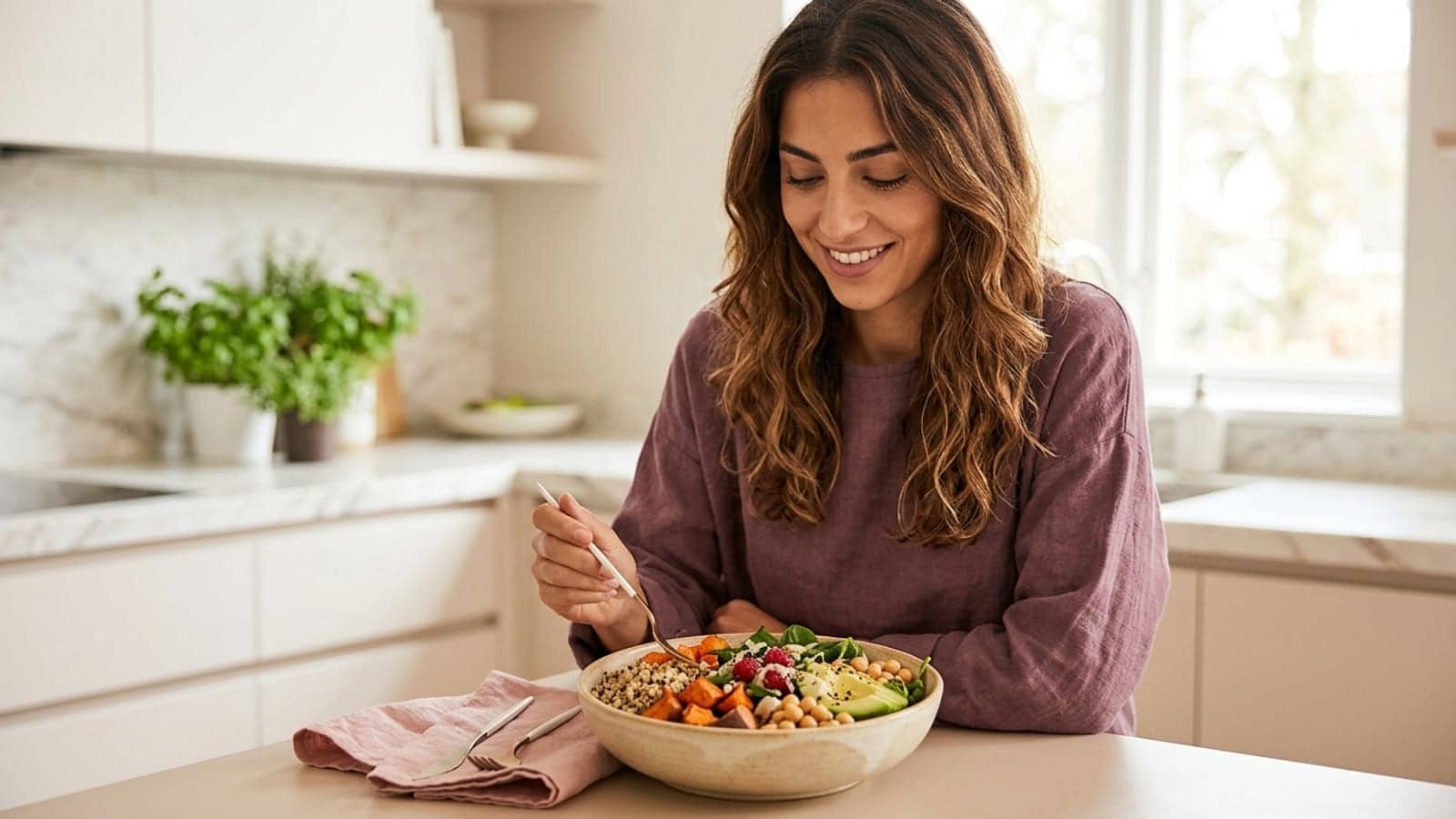
Lunch could be a big grain bowl with lentils, roasted vegetables, leafy greens, olive oil, and a small forkful of sauerkraut on the side. In the afternoon, warm herbal tea and a square of dark chocolate keep things gentle. Dinner might be grilled fish or beans with plenty of colorful vegetables and a slow carbohydrate like sweet potato.
Notice how varied and generous this looks. Good gut care is not about tiny portions or strict rules; it is about abundance and diversity. This is exactly the spirit of everyday healthy nutrition: plants at the center, whole foods most of the time, and real enjoyment on your plate.
Conclusion
Your gut is quietly running the show behind your energy, your mood, and your glow, and it responds faster than you might expect to a little loving care. Feed it a wide variety of plants, welcome fermented foods and fiber, notice your personal bloating triggers, slow down at the table, and let the gut-skin connection reward you. None of this asks for perfection, only steady, gentle consistency. Pick one change this week, perhaps a spoonful of yogurt each morning or an extra vegetable at lunch, and let it grow. Nurturing your gut health is one of the truest, most rewarding forms of everyday wellness, and your whole body will thank you for it.
Frequently asked questions
How long does it take to improve gut health through food?
Your microbiome starts shifting within a few days of eating differently, and many women notice less bloating and steadier energy within two to four weeks. Deeper, lasting change in gut health takes a few months of consistent, varied eating, so be patient and think in seasons rather than days.
Are probiotic supplements necessary for a healthy gut?
For most young women, food comes first. Fermented foods like yogurt, kefir, and sauerkraut feed your gut naturally and affordably. Supplements can help in specific situations, such as after antibiotics, but they are not a substitute for a varied, fiber-rich diet, and it is wise to ask a doctor before starting one.
Why do I feel bloated even when I eat healthy foods?
Healthy foods like beans, onions, and cruciferous vegetables are rich in fibers that can cause temporary bloating as your gut bacteria adjust. Eating slowly, increasing fiber gradually, drinking enough water, and managing stress usually ease this. If bloating is severe or constant, it is worth seeing a doctor.
Can gut health really affect my skin?
Yes. The gut-skin axis is well recognized: an inflamed, imbalanced gut can show up as dullness, breakouts, or sensitivity. Supporting your gut with fiber, fermented foods, and steady hydration often calms the skin over time, which is why gut and skin care work best together.
Tools and guides you might find useful
Related articles
Everyday Nutrition for Women: A Simple, Balanced Guide
Everyday balanced nutrition for young women: macros made simple, iron and key nutrients, hydration, mindful eating, and gentle habits instead of extreme diets.
7 min read

Cycle Syncing Guide: Align Life With Your Hormones
A beginner cycle syncing guide to align food, movement, work and self-care with your four menstrual phases and hormones for better women's health and wellness.
9 min read

Better Sleep Guide: Sleep Well for Real Wellness
Learn how to sleep better with simple sleep hygiene, a calming evening routine, and healthy habits that turn restful nights into lasting wellness and energy.
7 min read