
American vs European Kitchen: Differences & How to Choose
American vs European kitchen: discover the real differences in layout, cabinets, appliances and style, plus how to choose the one that fits your home.
 Yasmin Ferran6 min read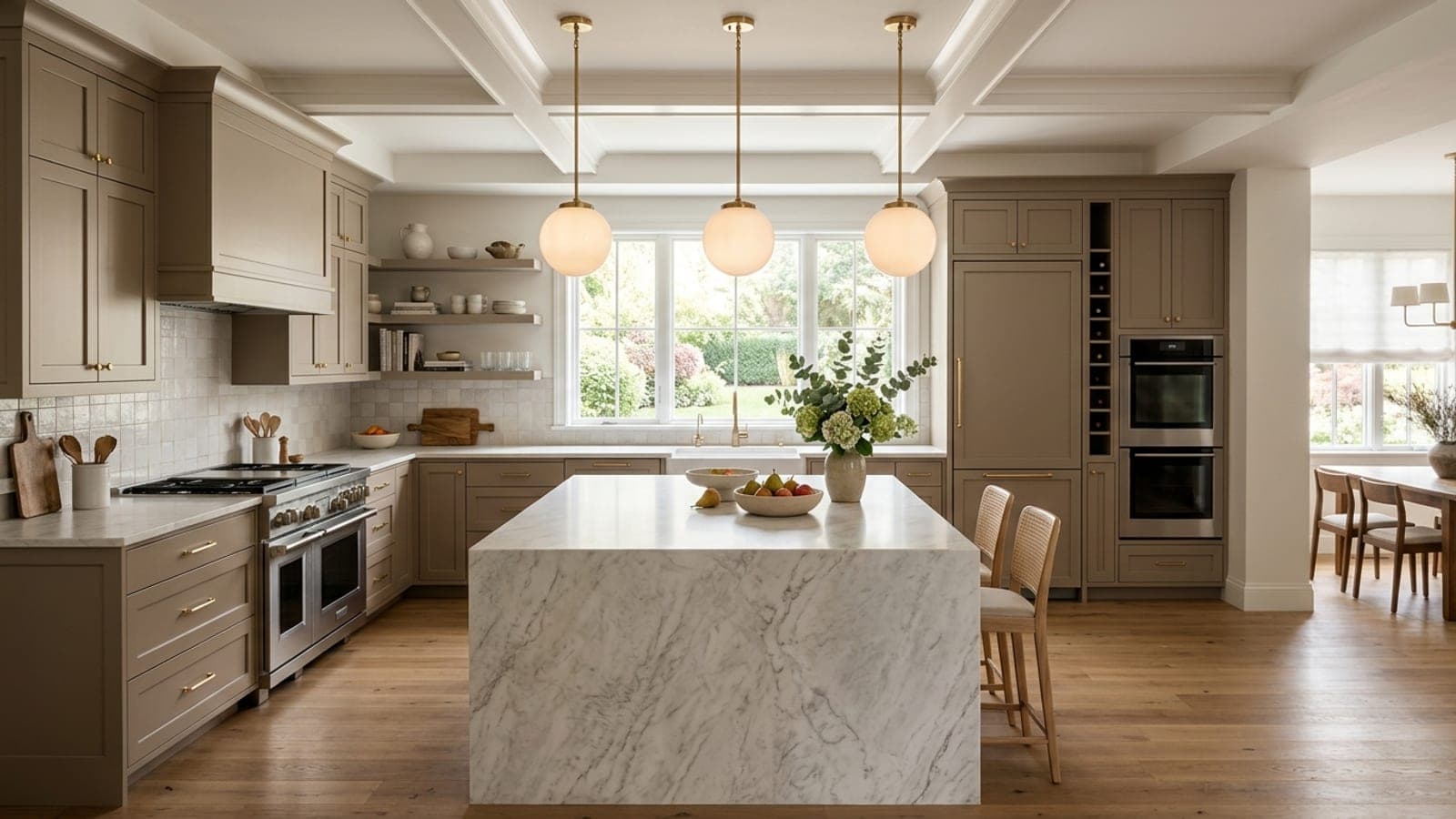
Choosing between an American and a European kitchen is really a choice about how you want to live at home. It shapes your morning routine, the way you welcome guests, and how relaxed you feel at the end of a long day when the counters are covered in pots and plates. It is less about fashion and more about fit.
These two families of design come from different homes and different habits. The American kitchen is generous, open and social, built around gathering and busy family life. The European kitchen is compact, precise and quietly efficient, built around getting things done beautifully in a smaller footprint. Both can feel wonderful in a modern Arab home; the secret is matching the style to your space and your daily rhythm rather than to a photo you saw online.
Below we compare the two honestly, from layout to cabinets to appliances, with side-by-side lists you can actually use while planning. For the basics of measuring and planning any kitchen, keep our kitchen guide nearby, and if clean lines make your heart happy, browse our modern style guide too.
Layout and flow
The clearest difference in the American vs European kitchen debate is the floor plan. The American kitchen is usually open-plan: it flows into the dining and living area and is often anchored by a large central island where people cook, eat, help with homework and chat all at once. It is a room that invites company and keeps the cook part of the conversation.
The European kitchen tends to be a defined space, sometimes a galley, sometimes a compact L or U shape, designed to be tidy, contained and highly functional. Walls are used cleverly, and every centimetre earns its place. If your home is on the smaller side, or you simply prefer cooking smells to stay out of the living room, this sense of containment is a real gift.
- American: open-plan with a central island, blends into living and dining
- European: compact and defined, galley or L-shape, kept as its own room
- American: ideal for hosting, entertaining and busy family life
- European: ideal for small footprints, quiet focus and easy control of mess
Cabinets and finishes
Cabinetry is where the two styles look most different at a glance. American kitchens love framed, shaker-style doors in painted wood, with visible knobs and handles and a warm, crafted feel. The look is soft, familiar and a little traditional, even in brand-new builds, and it forgives everyday life.
European kitchens favour handleless, frameless designs: flat slab doors, push-to-open mechanisms or discreet grip channels, and long seamless runs of colour. The effect is calm and almost architectural. Appliances are often integrated behind matching panels so nothing interrupts the clean horizontal line.
- American cabinets: shaker doors, painted finishes, visible hardware, cosy character
- European cabinets: slab doors, handleless, integrated panels, minimal and sleek
Appliances
Appliances tell the whole story. American kitchens celebrate them: a huge side-by-side fridge, a wide range cooker with several burners, and a statement extractor hood. These pieces are meant to be seen and used generously, and they genuinely suit big families and big-batch cooking.
European kitchens prefer to tuck appliances away. Fridges and dishwashers are frequently panel-ready and integrated, ovens are built into tall units at eye level so you never bend down, and everything sits within a smaller footprint. You gain a clean, uninterrupted look and, with good planning, lose very little in real capacity. The right choice here often comes down to how you shop and cook: a big weekly shop and batch cooking reward the American setup, while daily fresh cooking pairs beautifully with the compact European one.
Storage and organisation
Storage philosophies differ just as much. The American kitchen leans on a walk-in or reach-in pantry, a dedicated space for bulk shopping, spare crockery and small appliances you do not use every day. It is roomy and forgiving, and it hides a multitude of everyday clutter behind one door.
The European kitchen turns instead to clever internal systems: full-height larder units, deep pot drawers, corner carousels and drawer-in-drawer dividers that make a compact layout work far harder than it looks. If you love order and everything having its place, the European approach is deeply satisfying to use every single day. In short, the American pantry gives you one generous cupboard to fill, while the European system gives almost every item its own dedicated slot, which pays you back in saved minutes at every meal.
The look and feel
Emotionally, the two styles feel different the moment you walk in. The American kitchen is warm and layered, with open shelves, a farmhouse sink, mixed woods and soft textiles, a place that looks lived-in and loved. The European kitchen is serene and streamlined, with few visible objects, continuous surfaces and a quiet confidence that comes from restraint.
Neither is better than the other. One wraps you in comfort and memory; the other clears your mind and your counters. Many women find they are drawn to one style for the feeling it gives and the other for its everyday practicality, which is exactly why blending them works so well.
Which suits your home and how to blend both
So which should you choose? Think about your space and your life honestly, not about trends. If you host often, cook large meals and want the kitchen to be the beating heart of the home, lean American. If your apartment is compact, you value calm surfaces and you want cleaning to be quick, lean European.
The happiest kitchens often borrow from both. You can:
- Keep an open-plan American layout but fit sleek, handleless European cabinets
- Add a warm island and a farmhouse sink to an otherwise minimal European scheme
- Integrate the fridge and dishwasher for calm, yet keep one statement range you love
- Pair painted shaker fronts with hidden European drawer systems on the inside
Start with how you actually live, borrow the best of both worlds, and let the room feel unmistakably like you. When you are ready to plan the finer details, our kitchen guide walks you through measurements, the work triangle and lighting step by step.
Frequently asked questions
What is the main difference between an American and a European kitchen?
The American kitchen is open-plan and social, usually built around a large central island, while the European kitchen is compact, contained and highly efficient, designed to make the very most of a smaller space.
Are European kitchens better for small apartments?
Often yes. Their handleless cabinets, integrated appliances and clever internal storage are designed for compact footprints, so a European layout usually feels calmer and more spacious in a small flat.
Can I mix American and European kitchen styles?
Absolutely. A popular blend is an open American layout with a central island paired with sleek, handleless European cabinets and integrated appliances, giving you warmth and calm at the same time.
Which kitchen style is easier to keep clean?
The European style usually wins, because handleless doors, seamless surfaces and integrated appliances leave fewer edges and handles to wipe, though a well-finished American kitchen is not far behind.
Tools and guides you might find useful
Related articles
Modern Living Room Ideas for a Warm, Stylish Family Home
Discover modern living room ideas that balance style and comfort — smart layouts, sofas, colour and lighting for a warm, welcoming family space.
6 min read
Scandinavian Kitchen Ideas: Light, Calm and Simple
Discover Scandinavian kitchen ideas for a bright, calm and welcoming home: light wood, white cabinets, clever storage and cosy hygge touches you'll love.
6 min read
Small Bedroom Decorating Ideas for a Spacious Feel
Discover small bedroom decorating ideas that open up tight spaces using smart storage, soft colours, mirrors and cosy touches on any budget.
6 min read